
Tesla Unveils Accordion Supercharger to Speed Network Growth
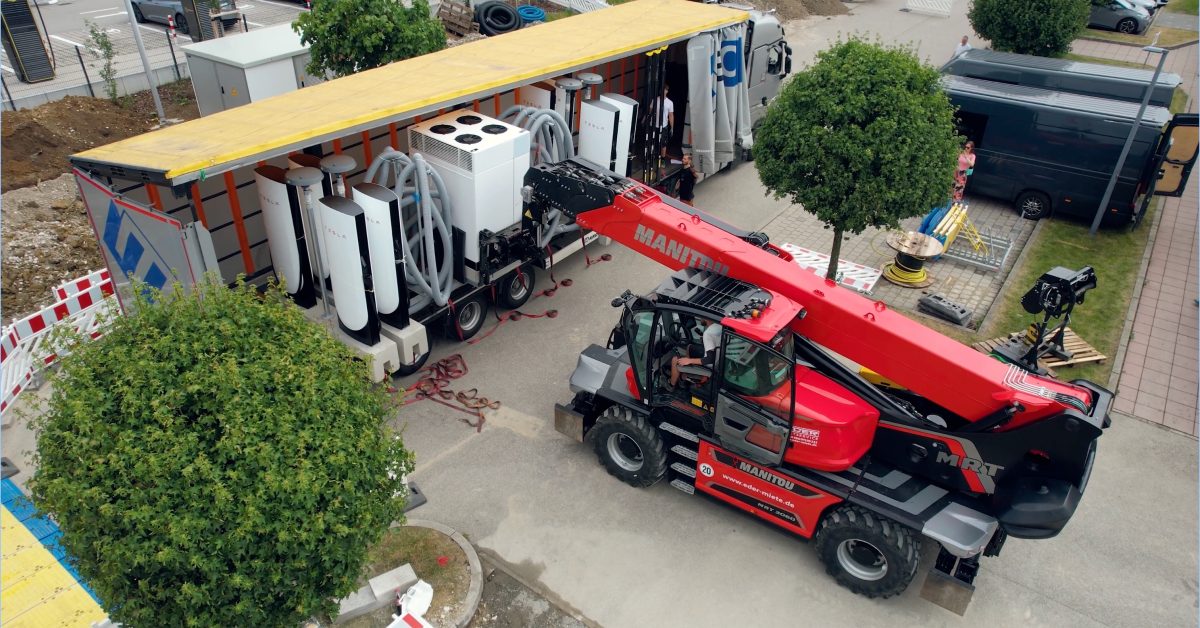
Tesla has officially deployed its first Accordion Supercharger, introducing a radical architectural shift aimed at dramatically accelerating its global charging network expansion. Designed to ship pre-assembled directly from the factory, the new hardware platform allows the electric vehicle manufacturer to deliver 16 complete charging stalls on a single flatbed truck. The rollout signals a strategic effort to streamline site installation while driving down infrastructure capital expenditures.
According to official corporate updates, the company plans to transition all future Supercharger manufacturing toward 100 percent factory pre-assembly. The Accordion architecture folds compactly for transit and expands on-site, enabling rapid deployment between existing parking spaces rather than requiring traditional behind-the-curb mounting. Furthermore, the unit is engineered for instantaneous commissioning, allowing stations to energize immediately without requiring dedicated technicians on-site to complete final electrical balancing.
Factory Efficiency Meets Urban Installation Challenges
Conventional charging station construction frequently encounters protracted delays caused by extensive civil engineering tasks. Traditional behind-the-curb installations require deep ground trenching, complex electrical conduit placement, and protracted local permitting reviews. By designing a pre-wired structural island that rests directly between designated parking stalls, Tesla effectively eliminates a significant portion of subterranean construction work typically demanded by urban retail locations and commercial real estate developers.
Financial projections shared in regulatory filings indicate the Accordion layout reduces total site installation costs by roughly 20 percent compared to standard Supercharger builds. Skipping intensive ground excavation allows project managers to unlock previously inaccessible urban parking structures and tight retail lots. This modular strategy builds directly upon Tesla’s long-standing pursuit of modular power infrastructure, transforming complex field engineering into a streamlined, repeatable manufacturing assembly process.
The company has spent years refining prefabricated station designs to compress installation timelines. Back in early 2022, pre-assembled structural slabs allowed Tesla to commission a complete station in just eight days. By early 2024, optimized logistics reduced delivery-to-online operational windows to just four days, saving roughly 15 percent in capital outlay per stall. The Accordion unit represents the logical culmination of those early modular experiments.
Overcoming Infrastructure Stagnation and Past Disruptions
The emphasis on rapid installation comes at a critical juncture for Tesla’s infrastructure division. Following significant executive restructuring in early 2024, including the temporary dissolution and subsequent partial rehire of its core charging division, network expansion experienced substantial operational friction. Although executive leadership pledged over half a billion dollars toward network expansion, quarterly operational metrics reflected an immediate and measurable slowdown in stall deployments worldwide.
Quarterly tracking data illustrates the impact of those internal disruptions. In the second quarter of 2024, new connector additions dropped to 2,017 stalls globally, marking a three-year low. Deployment figures remained volatile into 2025 and early 2026, with annual network connector growth slowing from historical highs of 45 percent down to roughly 17 percent. Despite operating over 82,000 connectors across 8,700 stations globally, expansion velocity has lagged historical benchmarks.
This expansion bottleneck arrived precisely as demand on the network reached unprecedented levels. While internal vehicle deliveries stabilized, Tesla opened its proprietary charging network to non-Tesla electric vehicles across major international markets. The influx of third-party vehicles increased overall stall utilization rates, exacerbating localized site congestion and underscoring the urgent necessity for high-density, rapidly deployable hardware solutions capable of keeping pace with fleet growth.
Rising Global Competition and the Chinese Flash-Charging Boom
Compounding Tesla’s domestic operational challenges is fierce competition from foreign market leaders. In international arenas, major automotive competitors are expanding their own high-speed power networks at blistering speed. Industry reports reveal that Chinese automaker BYD installed 10,000 high-power flash-charging stations within just five months of launching its network in mid-2026, targeting 20,000 active sites by year-end across hundreds of metropolitan regions.
The competitive contrast extends to technical capability as well as raw deployment speed. BYD’s ultra-fast charging units deliver up to 1.5 megawatts of peak output, capable of replenishing next-generation battery chemistries from 10 to 70 percent capacity in approximately five minutes. In contrast, Tesla’s V4 Supercharger cabinets top out at 500 kilowatts, placing pressure on the North American automaker to innovate both in deployment speed and energy throughput.
While direct comparisons must account for geographic concentration and vehicle compatibility differences, analyst reports emphasize that international competitors are currently deploying significantly more high-voltage power capacity per month than Tesla. To maintain its historical advantage in charging convenience, Tesla requires a structural installation vehicle that can be deployed at scale without being held back by localized labor shortages or municipal permitting queues.
The Road Ahead for Prefabricated Charging Infrastructure
The Accordion Supercharger system provides Tesla with the operational mechanism required to scale its physical footprint quickly. By integrating V4 charging hardware directly into factory-assembled modular frames, the automaker can mass-produce complete 16-stall charging hubs on standard assembly lines, turning site setup into a simple drop-in delivery process for commercial freight carriers.
As electric vehicle adoption expands globally and grid interconnection queues remain complex, modular infrastructure represents the future of ultra-fast charging deployment. If Tesla can successfully scale factory production of its Accordion architecture across global markets, it may overcome recent execution hiccups, drive down capital expenditure per site, and re-accelerate the expansion of its foundational fast-charging network.
