
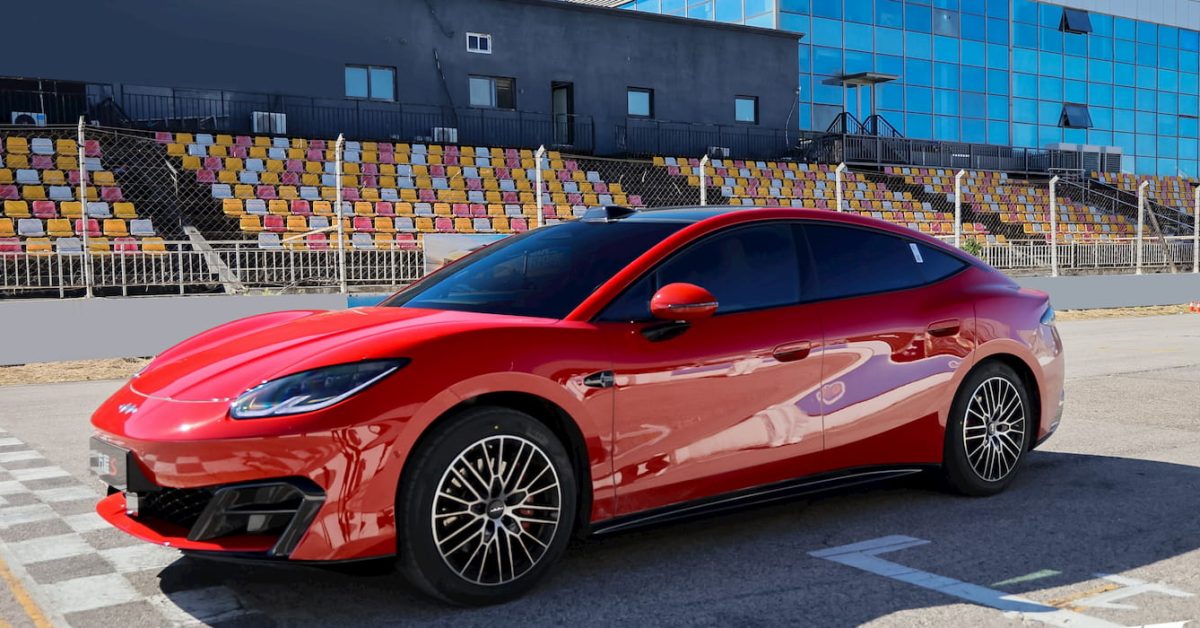
BYD Launches Formula S EV Sedan to Undercut Tesla Model 3
Expansion of the Fang Cheng Bao Lineup
Global electric vehicle leader BYD has officially introduced its newest electric sedan and grand tourer lineup, the Formula S series, under its specialized sub-brand Fang Cheng Bao. Designed to challenge dominant mid-size EV sedans, the newly unveiled lineup enters the market starting under $29,000. Industry filings indicate that BYD aims to capture market share directly from established rivals like the Tesla Model 3.
Fang Cheng Bao represents the fifth distinct sub-brand in BYD's automotive portfolio, positioning itself alongside the Denza, Yangwang, Dynasty, and Ocean series. Traditionally recognized for hardcore off-road plug-in hybrid SUVs like the Bao 5 and Bao 8, the brand is broadening its lineup. The launch of the Formula S series marks a strategic pivot into sleek, high-performance passenger sedans and grand tourers.
First showcased during preview events at the 2026 Beijing Auto Show, the Formula S vehicle line expands BYD's reach into China's highly competitive sedan segment. By entering this category, the brand directly targets popular models such as the Xiaomi SU7 and Tesla's best-selling sedan. Early market evaluations suggest this shift toward performance sedans will intensify price competition across the electric vehicle sector.
Aggressive Pricing and Range Specifications
The new Formula S portfolio encompasses five distinct trim levels, comprising three sedan variants and two high-performance GT models. Pricing across the lineup spans from 189,900 yuan to 239,900 yuan, translating roughly to $28,000 to $35,000 USD. This pricing strategy places the entry-level Formula S significantly below the base Tesla Model 3, which starts at 235,500 yuan ($35,000) for lower range.
The entry-level rear-wheel-drive Formula S sedan starts at 189,900 yuan, delivering a CLTC driving range of up to 466 miles (750 km). For buyers seeking maximum range, the long-range rear-wheel-drive model costs 209,900 yuan and extends range to 559 miles (900 km). Meanwhile, the all-wheel-drive sedan variant is listed at 229,900 yuan, offering a CLTC estimated range of 453 miles (730 km).
The performance-focused Formula S GT variant offers tailored options for enthusiast drivers. The rear-wheel-drive GT model starts at 219,900 yuan, providing a range of 528 miles (850 km), while the top-tier all-wheel-drive GT retails at 239,900 yuan with a 453-mile (730 km) rating. Comparative regulatory disclosures highlight that even top GT variants remain cost-competitive against rival entry-level luxury offerings.
Ultra-Fast Battery Technology and Chassis Systems
Engineering disclosures reveal that every Formula S vehicle comes equipped with BYD's second-generation Blade Batteries paired with a high-voltage Flash Charging architecture. This hardware setup dramatically reduces downtime at charging stations, allowing the vehicle to replenish its battery capacity from 10% to 70% in just five minutes. Pushing the fast charge further from 10% to 97% requires only nine minutes under optimal conditions.
Driving dynamics are governed by BYD’s intelligent body control systems, available in either DiSus-A air suspension or DiSus-M magnetic suspension configurations. Termed "One car, two personalities" by engineers, the dual-chassis offering allows drivers to easily toggle between soft, comfortable cruising and firm sports handling. This adaptive platform ensures the Formula S delivers both commuter refinement and dynamic driving capability.
Safety and automated navigation duties are managed by BYD’s advanced God’s Eye B driver-assistance system. The suite incorporates full-scenario intelligent parking alongside automated high-speed navigation on autopilot. Industry analysts note that integrating top-tier driver assistance hardware across all trim levels gives the Formula S series a strong competitive edge in software-defined vehicle features compared to price-matched competitors.
Cabin Tech and Premium Interior Features
Beyond raw performance and fast-charging capabilities, the interior of the Formula S features a range of high-end technology and comfort amenities. Drivers are greeted by a massive 26-inch augmented reality head-up display paired with an ergonomic three-spoke sports steering wheel. The cabin atmosphere is enhanced by a 128-color wraparound ambient lighting system that dynamically adjusts to driving modes.
Passenger comfort is prioritized through integrated sports seating and a specialized zero-gravity front passenger seat designed for relaxed travel. Furthermore, the center console features a built-in 6.9-liter smart refrigerator capable of heating or cooling beverages on demand. These high-end touches reflect a growing market demand among consumers for premium luxury features standard in mid-market electric vehicles.
Dimensionally, the Formula S sedan boasts a substantial road presence, measuring 5,060 mm in length, 1,967 mm in width, and 1,483 mm in height. With a wheelbase of 2,960 mm, the electric sedan offers noticeably more interior cabin space than the Tesla Model 3. The GT variant presents a slightly more compact profile, measuring 5,025 mm in total length while retaining wide body proportions.
Global Strategy and Market Impact
While initial deliveries of the Formula S series are centered on China, industry watchers are monitoring BYD’s international expansion plans. Although an official timeline for Western distribution of the Formula S remains unconfirmed, BYD has already begun exporting Fang Cheng Bao models. Recent European automotive releases include the Ti 7 SUV, marketed globally after its successful domestic launch as the Tai 7.
By offering longer range, faster charging speeds, and a larger vehicle footprint at a lower price point, BYD poses a direct challenge to established EV incumbents. Financial analysts project that the Formula S line will pressure rival automakers to reconsider their localized pricing models. As global EV adoption accelerates, BYD's aggressive multi-brand strategy continues to reshape competitive boundaries across the automotive industry.
